

What is actually in a Lilyflow pad
Three materials, five things left out, and all of it printed on the box rather than hidden.
3 min read
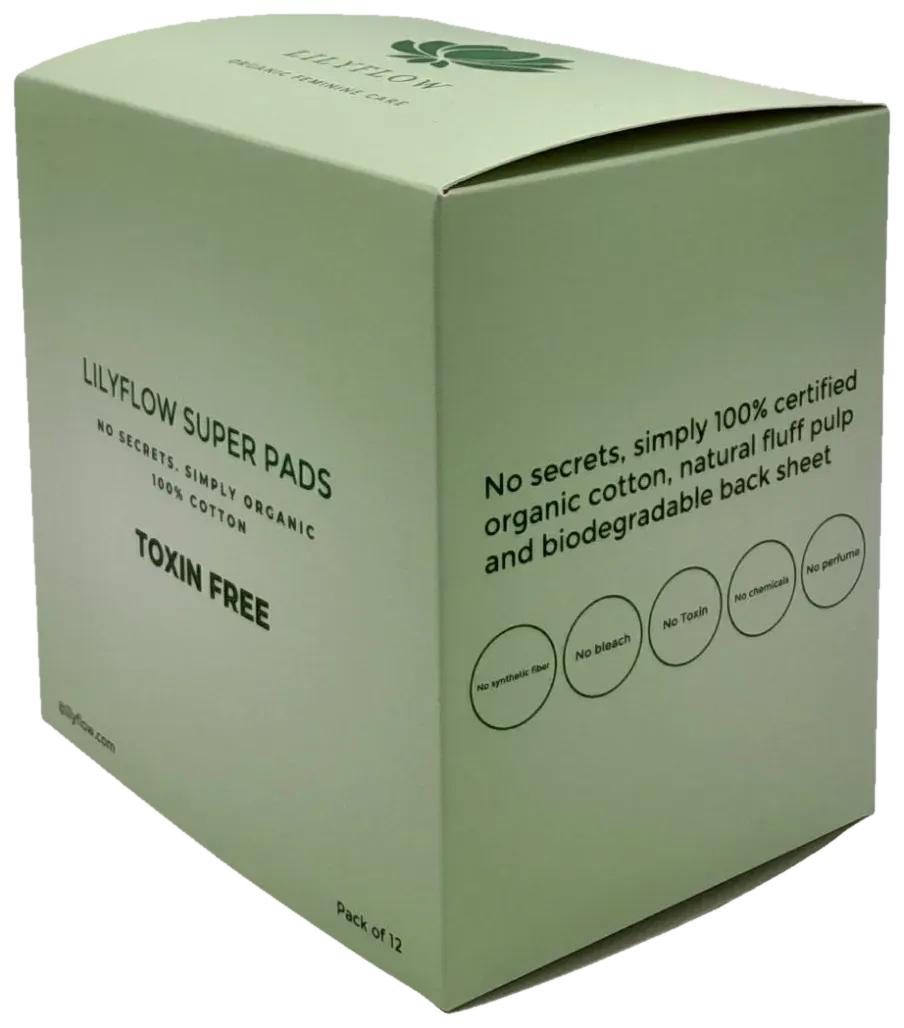
Pick up most boxes of pads and turn them over. You will find washing instructions, a recycling mark and a helpline number, and no list of what the pad is made from. It is not hidden exactly. It is just not there.
That gap is the reason Lilyflow exists, and it is why two words are printed on the front of every box before the product name even appears.
No secrets. Simply organic.
What is in it
The back of the box says it in one line, and there is nothing after that line:
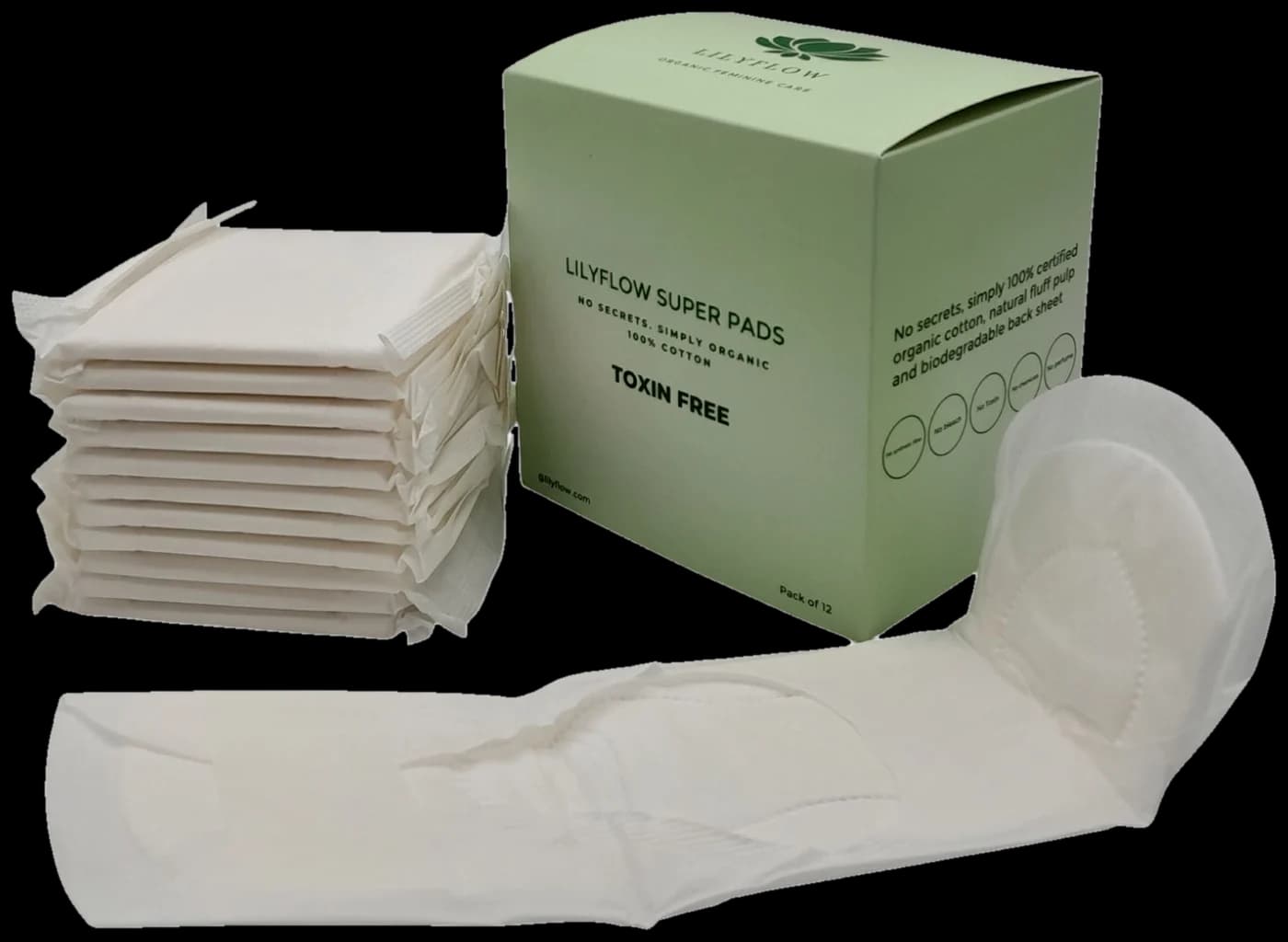
No secrets, simply 100% certified organic cotton, natural fluff pulp and biodegradable back sheet.
Three materials, and each one is doing a different job. The organic cotton is the layer against your skin. The fluff pulp underneath it is the part that holds the liquid. The back sheet is the layer that stops it going any further.
The word doing the most work there is certified. Organic is a description anybody can print. Certified organic means the cotton was grown under a standard somebody else checks, which is the difference between a claim and a claim you can follow up.
What is left out
Five marks run along the bottom of the same panel, each one a thing the pad does not contain:
- No synthetic fibre
- No bleach
- No toxin
- No chemicals
- No perfume
The last one is worth pausing on. Fragrance is added to a lot of period products, and it is added to cover a smell rather than to do anything for you. A Lilyflow pad smells of nothing, because nothing has been put in it to smell of anything.
Bleach is the one people ask about most. Chlorine bleaching is what makes a pad look bright white, and it is a step that gets skipped here. That is why the pads are the colour of cotton rather than the colour of paper.
The whole label, in four lines
Everything above compresses to four lines:
- Top layer: 100% certified organic cotton
- Core: natural fluff pulp
- Back sheet: biodegradable
- Fragrance and bleach: none
Four lines is a short label for a product category that usually manages none.
Why it is on the box and not just on the website
A website can be edited. A printed box cannot. Putting the contents on the packaging is a slower and more expensive way of saying it, and it commits you to it for the length of a print run.
It also means you can check this page against something you already own. Go and look at the box in your bathroom. If what is printed there does not match what is written here, the box is the one that counts.
What arrives
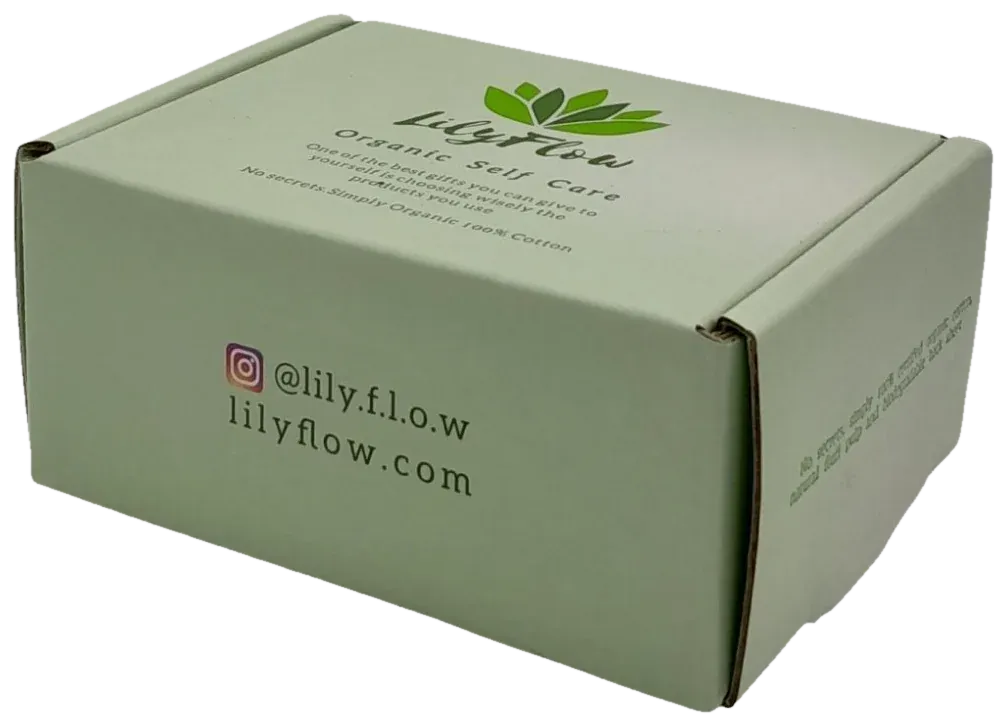
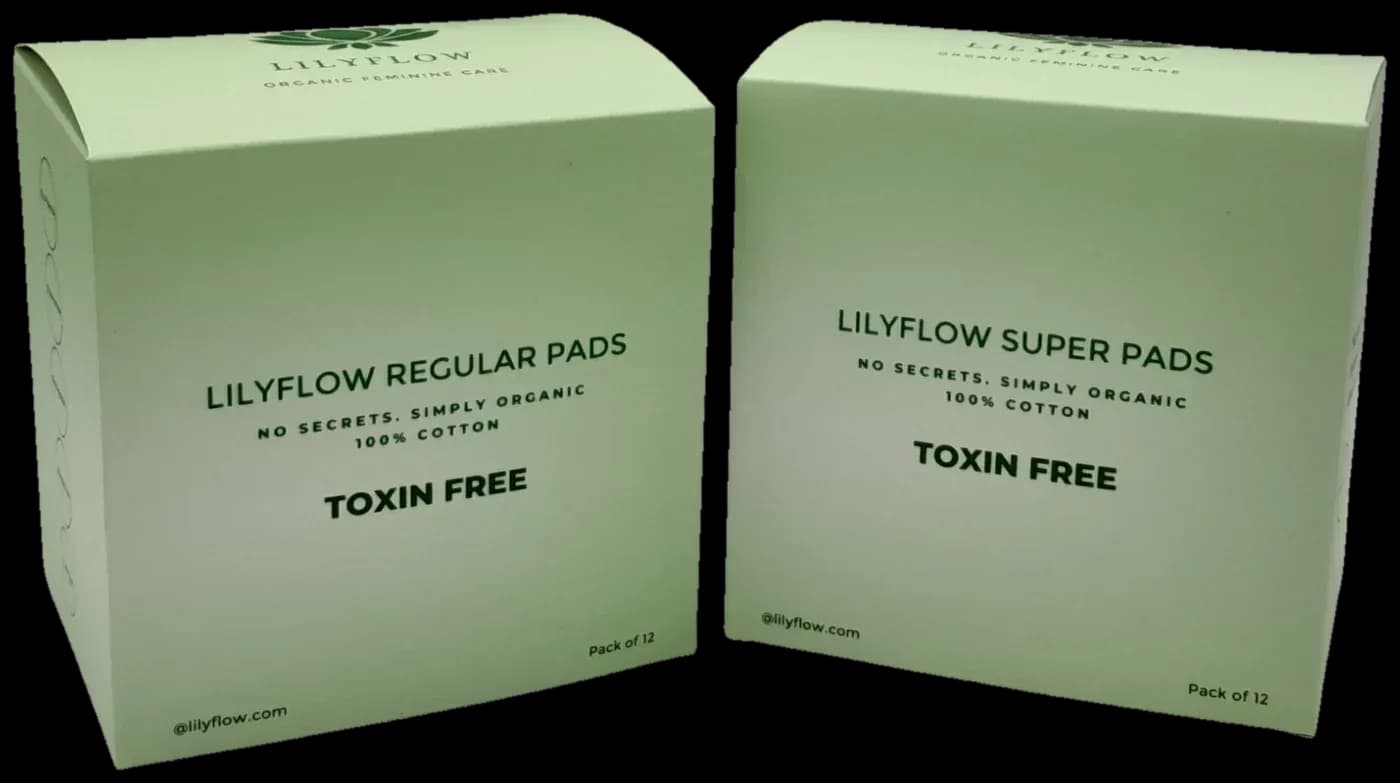
Twelve pads to a box, in the day size or the night size, and the box is made to go through a letterbox rather than to need somebody home to sign for it. The liners come twenty-eight to a pack and post the same way.
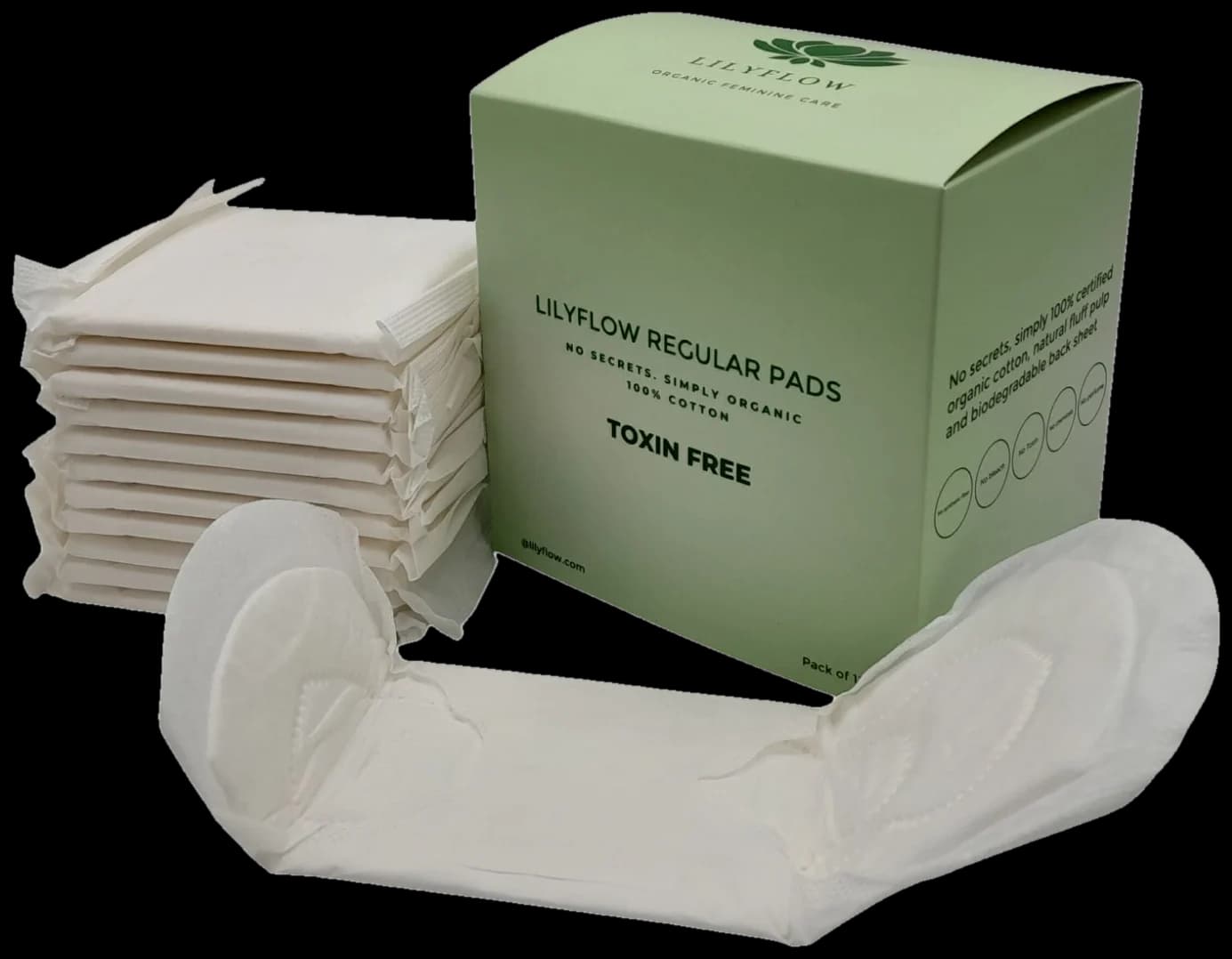
Organic Cotton Pads (Day)
£3.70
Everything in the range is made this way, and says so on the box.
Mentioned in this post
More to read
Organic cotton
Day pads, night pads and liners: which one, when
Three products, one difference between them that matters, and what the printed box names mean.
2 min read
Organic cotton
Why switch to using 100% pure organic and natural sanitary care products
The average woman will use approximately use around 11,000 pads, tampons during her lifetime.
3 min read